

Key Takeaway
- The median U.S. sales representative earns $63,230, while sales managers average $150,530 annually
- Sales engineers top the pay scale among sales roles with median pay of $121,520
- Only 28% of sales professionals expect their team to hit 100% of quota for the year
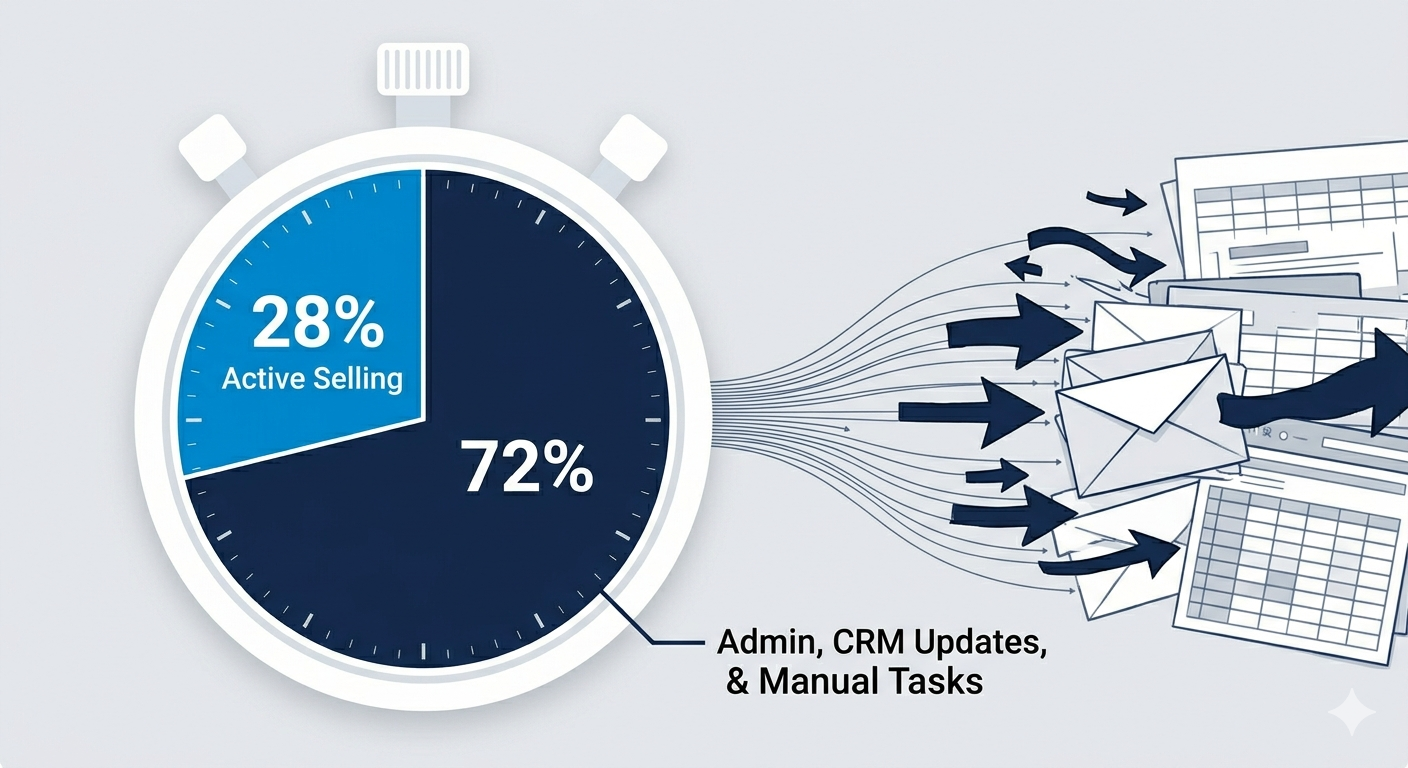
- Reps spend just 28% of their week actually selling, and 69% say selling is getting harder
- 81% of sales leaders believe AI can reduce time spent on manual tasks
- About 1.8 million sales openings are projected annually due to turnover and replacement needs
- 85% of sales leaders are struggling to secure budget for needed headcount
Sales Salary Benchmarks: What Reps and Managers Earn
Pay benchmarking is the foundation of any defensible compensation plan. Before tweaking accelerators or quota multipliers, revenue leaders need to understand where their offers sit relative to national medians.
Sales Representative Pay Distribution
Salary spread within the sales rep population is wide, reflecting differences in industry, experience, and segment (SMB vs. enterprise).
- The median sales representative salary in the U.S. is $63,230 1.
- The best-paid sales reps (top 25%) earn $93,280 1.
- The lowest-paid reps (bottom 25%) earn $47,220 1.
- Sales managers earn an average annual salary of $150,530 1.
The roughly 2x gap between the bottom and top quartile signals just how much variability exists across compensation plans — a meaningful data point for any rep weighing an offer or any RevOps leader benchmarking pay bands.
Sales Pay by Occupation
Looking beyond the general “sales rep” category, the U.S. Bureau of Labor Statistics breaks out median pay by sales discipline. The differences are dramatic.
- The median annual wage across all sales occupations was $37,460 in May 2024 2.
- Sales engineers had 2024 median pay of $121,520 2.
- Wholesale and manufacturing sales representatives earned median pay of $74,100 2.
- Insurance sales agents had 2024 median pay of $60,370 2.
- Real estate brokers and sales agents earned $58,960 2.
- Retail sales workers had median pay of $34,730 2.
The takeaway for B2B leaders: technical sales roles like sales engineering command nearly 3.5x the pay of retail sales. Compensation benchmarks must be discipline-specific to remain competitive.
Quota Attainment and Selling Reality
Compensation only works as a motivator when reps believe quotas are attainable. The latest data suggests confidence is wavering.
Quota Confidence Is Low
- Only 28% of sales professionals believe their teams will hit 100% of their quota for the year 1.
- 69% of sales professionals say selling is getting harder 1.
When less than a third of sellers expect to clear quota, comp plans that pay heavily on full attainment risk de-motivating the very people they’re designed to reward. Many revenue teams are revisiting accelerator structures and milestone bonuses to keep mid-funnel performers engaged.
Reps Aren’t Spending Their Time Selling
- Sales reps spend just 28% of their week actually selling 1.
The other 72% disappears into admin, CRM updates, internal meetings, and prospect research. Revenue Grid addresses this directly by automating activity capture across email, calendar, and meetings into Salesforce, SAP, Oracle, and Microsoft — eliminating the manual logging that eats into selling time.
Team Selling and Cross-Functional Alignment
Modern B2B deals rarely involve a single seller. Account executives, sales engineers, customer success, and executive sponsors all collaborate — and that has implications for how compensation plans are structured.
- 81% of sellers say team selling helps them close 1.
- 82% say alignment with other sellers can be challenging to achieve 1.
The implication for compensation: split credits, overlay quotas, and shared incentives are no longer edge cases — they’re table stakes. Plans that fail to recognize collaborative contribution risk discouraging the very behavior that drives the largest deals.
Headcount, Hiring, and Workforce Turnover
Compensation strategy doesn’t exist in a vacuum. It’s tightly coupled to hiring conditions and turnover dynamics.
Hiring Pressure on Sales Leaders
- 85% of sales leaders say they are struggling to get a budget for needed headcount 1.
When budget is constrained, leaders typically respond in one of two ways: stretch existing reps with higher quotas, or invest in technology that lifts per-rep productivity. Both options have direct compensation consequences.
The Sales Talent Pipeline
- About 1.8 million openings are projected each year, on average, in sales occupations due to the need to replace workers who leave the occupations permanently 2.
That’s a sobering number. Turnover at this scale makes competitive base pay, transparent commission plans, and clear career progression non-negotiable for retention.
Technology, AI, and the Comp Plan Connection
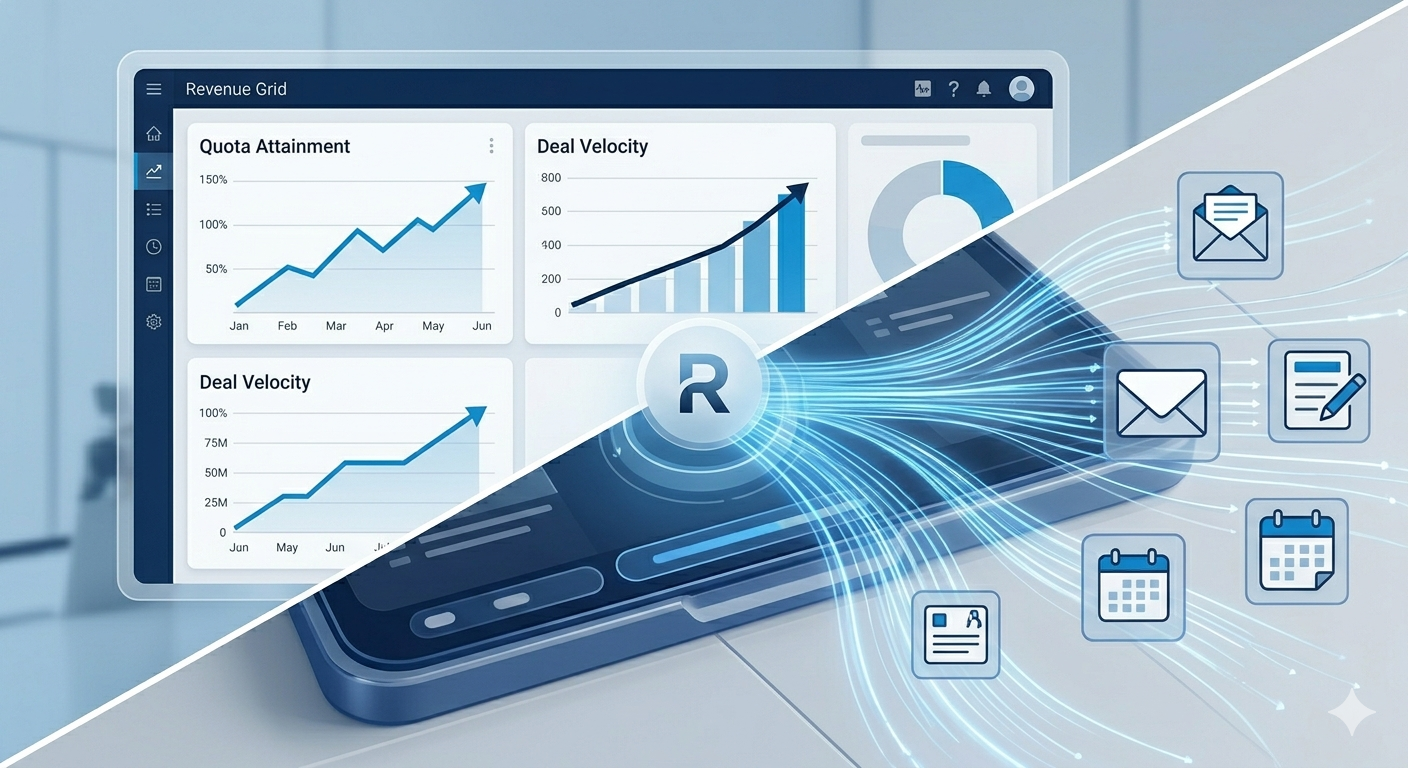
Sales technology — and increasingly AI — is reshaping how reps spend their time, which directly influences earning potential.
Tool Sprawl Is a Productivity Drag
- 29% of sales pros say that reducing their tech stack would make them more efficient 3.
When reps are forced to bounce between disconnected tools, selling time shrinks and so does commission. Consolidated platforms that unify pipeline visibility, activity capture, and forecasting are gaining traction precisely because they convert wasted minutes back into deal progression.
AI as a Compensation Multiplier
- 81% of sales leaders think AI can help reduce time spent on manual tasks 3.
Revenue Grid’s AI-driven insights surface deal risks, next-best actions, and pipeline gaps automatically — letting reps focus their compensated selling time on the deals most likely to close, rather than reactive admin work.
How Compensation Surveys Are Structured
For RevOps and total rewards teams designing comp plans, methodology matters. Industry-grade compensation surveys segment data across multiple dimensions.
- The WTW 2025 Sales Compensation and Design Survey uses a methodology covering 9 functions, 15 disciplines, 15+ career levels, and 10+ global grades 4.
This level of granularity is what allows organizations to benchmark not just “AE pay” but “Enterprise AE, Software, Career Level 4” pay — which is the resolution required to build defensible plans.
What These Statistics Mean for Revenue Leaders
Pulling the threads together, the data points to a few clear realities:
- Pay variance is wide. Sellers in the top quartile earn nearly double their bottom-quartile peers 1, and technical disciplines like sales engineering pay 3x more than retail 2. Benchmarking must be role-specific.
- Quota attainment is fragile. With only 28% of sellers confident in hitting full quota 1, comp plan design needs to reward progress, not just perfection.
- Selling time is the scarcest resource. When reps sell only 28% of the week 1, every hour returned to selling has compounding effects on commission.
- Team-based selling demands team-based pay. With 81% of sellers reporting that collaboration drives closes 1, comp plans must account for shared contribution.
- AI and consolidation are the lever. Leaders broadly agree on AI’s potential 3, and tech stack rationalization is a real productivity unlock 3.
This is where a Revenue Action Platform like Revenue Grid earns its place: by giving sales leaders 360-degree pipeline visibility, automating activity capture, and surfacing AI-driven signals natively inside Salesforce, SAP, Oracle, and Microsoft — so reps spend more time on revenue-generating work and comp plans actually pay out as designed.
References
What is the average sales rep salary in the U.S.?
The median U.S. sales representative earns $63,230 annually, with top-quartile reps making $93,280 and bottom-quartile reps making $47,220 1. Pay varies significantly by industry, segment, and experience level.
Which sales roles pay the most?
How many sales reps actually hit quota?
Only 28% of sales professionals believe their teams will hit 100% of quota for the year 1. This drop in confidence is shaping how leaders design accelerator structures and milestone-based bonuses.
Why are sales reps spending so little time selling?
How is AI affecting sales compensation?
81% of sales leaders believe AI can reduce time spent on manual tasks 3. When AI handles activity capture, deal scoring, and next-best-action surfacing, reps can dedicate more time to revenue-generating work — directly improving their ability to hit quota-driven commission tiers.