

A sales pipeline is an essential part of any business. It helps you visualize your sales process and see where you are in the selling cycle. If a deal is stuck at an earlier stage, it’s easy to see that something needs to be done to move it forward.
But what if you’re not sure what needs to be done? Or what if you have no idea how many deals are still in your pipeline?
That’s where sales pipeline tracking comes in.
In this article, we’ll explain everything about pipeline tracking and how you can use it to improve your sales performance.
What is Pipeline Tracking?
Pipeline tracking is the process of monitoring and managing the progression of potential sales through each stage of the sales funnel. By understanding where each opportunity is in the sales pipeline, businesses can better forecast their sales revenue and make more informed decisions about resource allocation.
Pipeline Tracking General Overview
When tracking sales pipeline, you might want to focus on four key components: opportunity stages, conversion rates, deal values, and lead sources. By understanding these elements, you can more effectively manage your sales pipeline and close more deals.
Opportunity stages indicate where your potential customers are in their decision-making process. By tracking these stages, you can identify those ready to convert and tailor your approach accordingly.
Conversion rates show how many leads are converted into paying customers. This metric is important to track because it helps you gauge the effectiveness of your sales process. If you have a low conversion rate, it may be indicative of a problem somewhere in your pipeline.
Deal values represent the total value of all the deals in your pipeline. Understanding this number allows you to see the potential revenue your pipeline is generating and better prioritize which opportunities to focus on.
Lead sources reveal where your prospects are coming from. It helps you determine which marketing channels are bringing in the most leads. Knowing which lead sources are most effective, you can invest more time and resources into those channels.
Why Pipeline Tracking is Important
Sales pipeline tracking helps your sales reps stay organized and efficient in their efforts. By tracking the progress of each prospect through the sales pipeline, they can prioritize their time and resources and focus on prospects that are most likely to convert into customers. Additionally, sales pipeline tracking can help sales teams identify potential bottlenecks in sales processes and make necessary adjustments to improve close rates.
When you track sales pipelines, you can find answers to questions like:
- Where are potential leads in their buying journey?
- Which leads have been in the pipeline for longer than expected?
- Which deals are moving forward quickly, and which ones are dragging?
How to Start Pipeline Tracking
Starting a sales pipeline tracking system can be daunting. It’s a big investment of time and money, and it can be hard to know where to start.
Let’s take it to step by step.
Step 1: Gather the data. You can do this by using a spreadsheet, CRM software, or a sales pipeline visibility tool.
Step 2: Decide which metrics will make sense for your company. You may want to track metrics like number of leads, conversion rate from lead to opportunity, revenue per opportunity, number of opportunities closed per quarter or month, etc.
Step 3: Analyze and review the performance once you’ve all the necessary information.
Effective Pipeline Tracking Tips
Here are some tips to increase the effectiveness of your sales pipeline tracking activities:
1. Know Your Goals
Do you have a specific target amount of money or number of leads you’d like to hit by month? Are you hoping to land more accounts within a timeframe? Having a clear goal in mind will help you identify which metrics are most important for you and your team—and ensure that everyone’s on the same page.
2. Keep It Simple
Don’t overthink your sales pipeline tracking. It’s not rocket science—it’s just a way to keep an eye on your sales process and motivate you toward closing deals. When your sales pipeline tracking system is simple, everyone can look at it and know exactly what they need to do to sell more.
3. Collect Data from Every Step of Your Sales Process
Start by tracking where leads come from, who’s responsible for each stage of the process (from lead generation to closing), and how long each step takes so that you can identify any bottlenecks or areas for improvement as early as possible.
4. Use a sales pipeline tracking tool
There are plenty of tools that can help you keep track of your sales pipeline—and they all have unique features.
But no matter which one you choose, it’s essential to use a tool that will track all your sales pipelines in one place and provide actionable insights.
Also, since you want to see how many opportunities are in each stage of the funnel at any given time, consider using a tool that allows you to access data from anywhere with an internet connection.
How Revenue Grid Helps With Pipeline Tracking
Revenue Grid helps with sales pipeline tracking by giving you complete visibility of your sales pipelines.
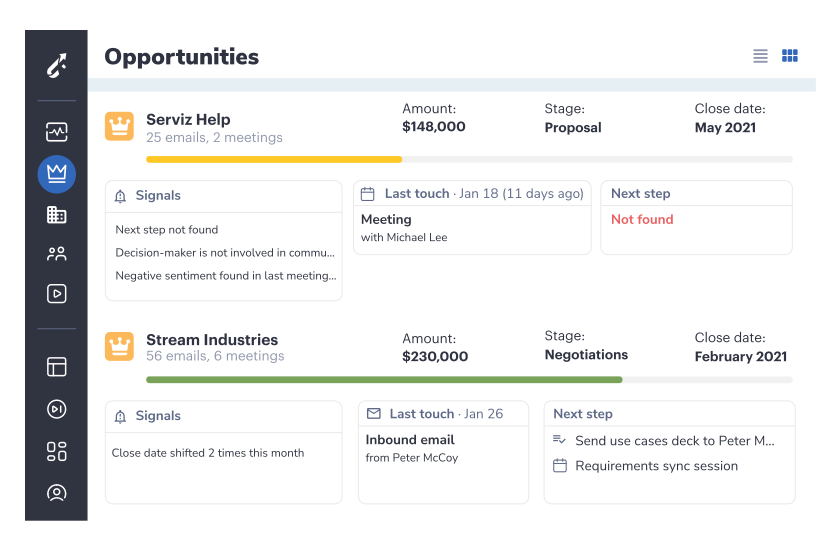
- Understand who’s been contacted, when, what they’ve responded with, and how their response has affected the next steps in the process.
- See how many leads and opportunities your team is working on, how many are in each stage of the pipeline and where they are currently in the process.
- Track how many leads have converted into opportunities and opportunities into deals.
- See which deals are moving through each stage of the pipeline and how long it takes them to reach each stage.
Revenue Grid is easy to use, simple to set up and gives you the data you need to make better decisions.
Use Revenue Grid for sales pipeline tracking: