

Key Takeaway
- Emotional branding can help B2B SaaS sales teams shorten deal cycles by 50% compared to purely rational approaches
- Storytelling, FOMO, and experience-focused selling are proven strategies that drive 82% higher customer loyalty
- User experience and visual identity are foundational elements that create emotional connections before sales conversations begin
- revenuegrid's guided selling platform enables emotional branding through data-driven insights and workflow automation
When it comes to buying a product, most people are spending with their hearts instead of their heads.
A study by Neuromarketing of 1400 successful advertising campaigns found ads that used emotional branding performed twice as well as those that used rational content to sell their products.
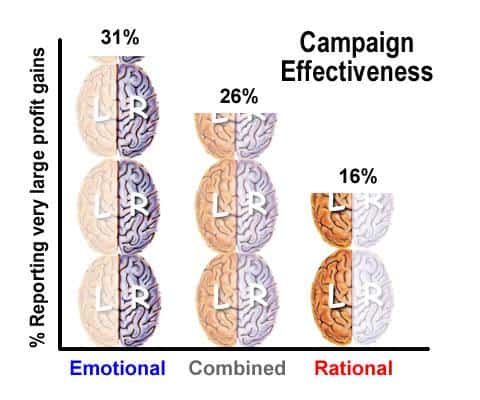
When it comes to spending money, buyers are anything but rational.
Pringle and Field attribute these findings to a lot of scientific stuff that happens in our brain when we make a buying decision, like how our brain has a more powerful recording of emotional stimuli over other factors.
But what does all this mean for sales teams? And is there a way sales reps can use the branding of their products in their sales activities to close more deals?
The answer is—absolutely. According to Maslow’s hierarchy of needs, the highest-level needs a human has revolve around creativity, respect by others and belonging to a group. If a sales rep can make a prospect feel like they’re going to be a part of something by purchasing their product, it can be way more powerful than showing them a bunch of product features.
In this piece, we’re going to be looking at the importance of branding in sales and how your SaaS can use it to drive measurable sales outcomes for enterprise teams.
The importance of emotional branding in sales
Emotional branding builds deeper customer relationships by connecting with psychological needs beyond product features, leading to higher loyalty and shorter sales cycles in B2B environments.
Remember the good old days?
You know, when folks would see a brand and instantly trust it. And all a brand like Winchester or Goodyear had to do to make a sale was merely have their products available.
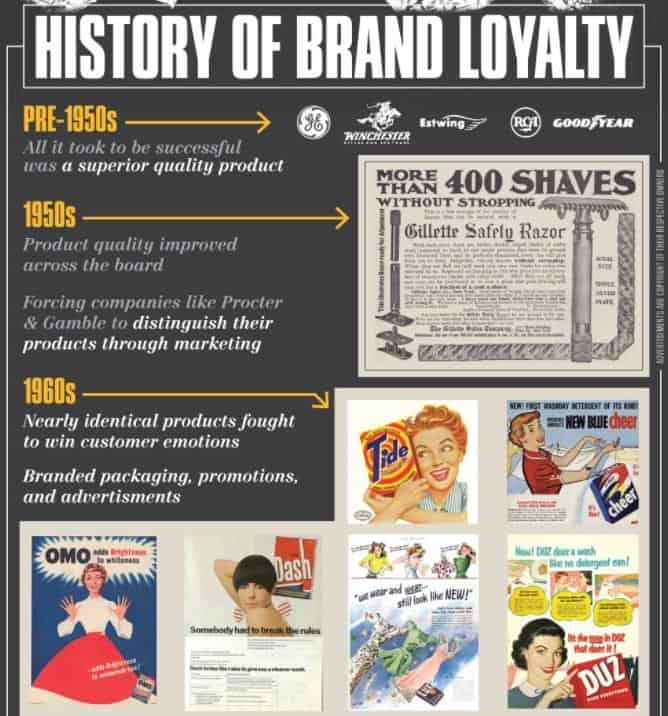
In the 60s, brands started telling stories to drive up their sales through emotions. Hint: it worked.
Then, in the 60s, something changed.
Brands started using emotions to tell a story and sell their products. And emotional branding was born.
The main perk of emotional branding is that it helps businesses build their brand loyalty. In fact, 82% of adults in the US alone say that they’re loyal to a certain product brand. Four factors lead to a consumer feeling loyal to a brand rather than buying from their competitors:
- Price
- Convenience
- Features
- Emotions
And it’s the last factor, emotions, that often have the biggest impact on a customer’s buying decision. Just ask science. A study by Psychology Today found positive emotions are the real key to consumer loyalty.
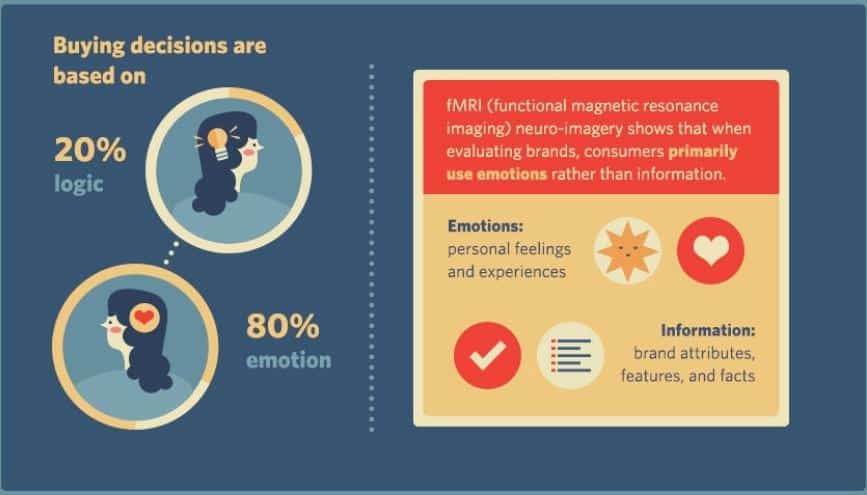
Science says most of the time we spend money with our feelings instead of looking at the facts.
The reason emotional branding is such an influential tool in building brand loyalty and increasing sales is that it’s a consumer-centric approach to winning over your customers.
It’s like your company saying “hey, we’re here for you, we want to give you a sense of self-identity, and we’re going to treat you as a person instead of a customer.”
Let’s look at a SaaS brand that absolutely nails their emotional branding—Slack. Their mission is “to make people’s working lives simpler, more pleasant and more productive”—and it’s working.
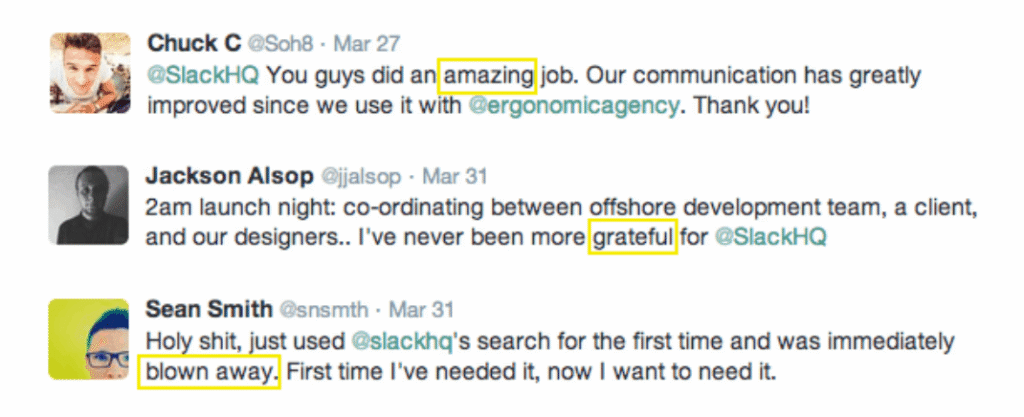
Character limitations on Twitter stimulate powerful emotional expressions.
What do all of the above tweets have in common? They’re from customers who love Slack. They’re loyal customers.
But how did Slack achieve this?
According to Trandjackers, there are five key traits to a brand’s personality that help it bring out emotions in their customers:
- Excitement: carefree, spirited, and youthful
- Sincerity: kindness, thoughtfulness, and an orientation toward family values
- Ruggedness: rough, tough, outdoorsy, and athletic
- Competence: successful, accomplished and influential, highlighted by leadership
- Sophistication: elegant, prestigious, and sometimes even pretentious
And branding and marketing guru Geoff Preece says Slack uses three of these traits in its emotional branding to make their customers love them: sincerity, competence, and excitement.
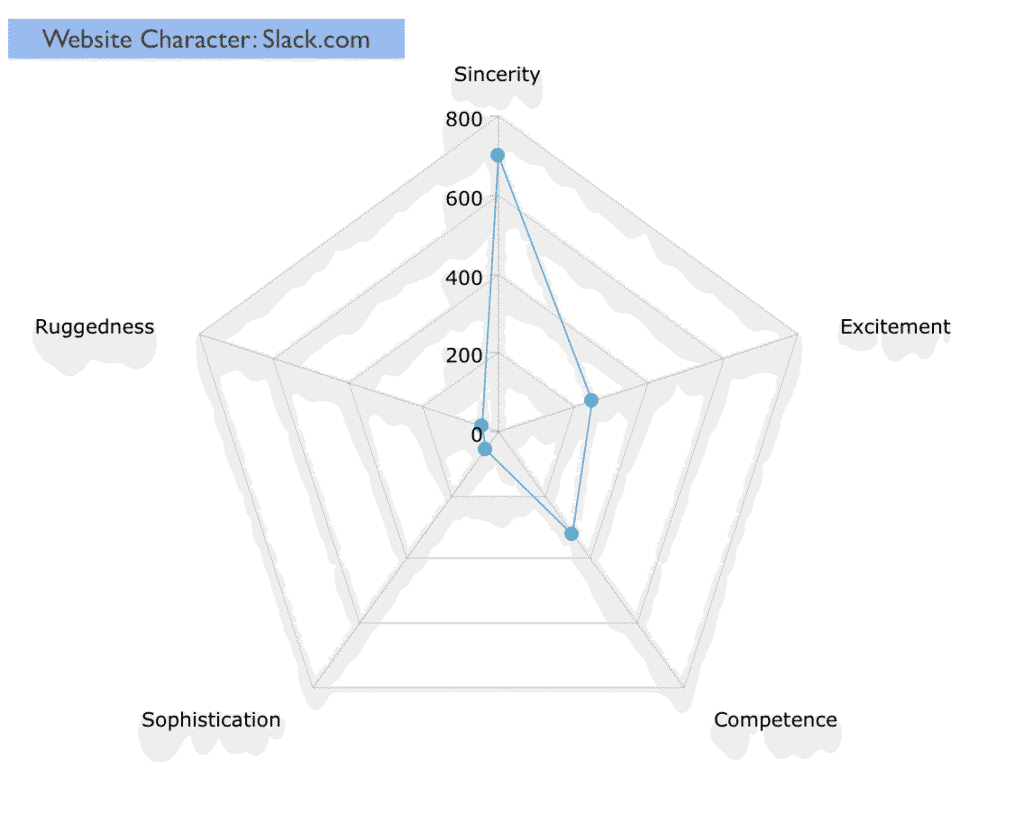
Forget sophistication and ruggedness. Slack is all about playing the nice guy and being sincere.
As you can see, there’s one Slack trait that stands out clearly—sincerity. Preece states that Slack uses certain kinds of sincerity to draw customers on through emotional branding:
- Friendliness: Slack possesses a hospitable and pleasant persona. It connects with its audience through its empathy, generosity, and social savviness.
- Real: Slack is factual and objective in its statements. It focuses on highlighting the benefits of its alternatives accurately by sticking to the facts and commonly accepted ideas. Real may refer to natural or down-to-earth qualities, it also establishes the Slack option as the logical choice.
- Down to Earth: Slack embodies the virtues of humility and practicality. It also emphasizes being realistic and using common sense.
- Cheerful: Slack embodies the virtues of happiness and optimism. It communicates its message in a lively manner to propagate a joyful vibe.
But does all of this sincerity translate to sales? For Slack, the love of their brand is so fierce that their sales team has been able to combine a self-service go-to-market approach to attract non-paying users, while its direct sales team focuses on attracting paid users within larger organizations.
According to FourWeekMBA, Slack takes a flywheel approach to its sales process:
- The Slack free version easily attracts a large number of users
- Self-service users become leads for salespeople
- Salespeople convert free users in paying customers, usually within larger enterprises
- These larger enterprises that join in create organic awareness of Slack inside and outside of their organizations
- Slack keeps investing in its product and customer experience
- It also employs after-sales customer success representative, which makes it easy to trigger referral customers
And it doesn’t take a genius to figure out that a lot of those free users that initially sign up to Slack did so because of the loyal following the brand currently has. Businesses want to get in on the action and find out why everyone else is so excited about using the product for themselves.
But most of all, success lies in a customer’s user experience, Slack CEO Stewart Butterfield says.
“Even the best slogans, ads, landing pages, PR campaigns, etc. will fall down if they are not supported by the experience people have when they hit our site, when they sign up for an account, when they first begin using the product and when they start using it day in, day out.”
But how can sales reps sell that experience to their prospects?
How User Experience Drives Emotional Branding in SaaS
User experience forms the foundation of emotional branding by creating positive feelings through intuitive interfaces, seamless onboarding, and ongoing support that makes customers feel valued and successful.
The first impression your SaaS makes isn’t through a sales call or marketing campaign—it’s through your user experience. Ninety percent of users churn if they do not understand a product’s value within the first week of signing up, representing a revenue leak exceeding one million dollars annually for most growing subscription companies.
This statistic highlights why emotional branding must start with user experience design. When users feel confused, frustrated, or overwhelmed during onboarding, they develop negative emotional associations with your brand before your sales team ever has a chance to intervene.
Consider how you can audit your user experience for emotional impact:
- Onboarding Flow: Does your onboarding make users feel accomplished within minutes, or do they struggle to see value?
- Interface Design: Are your workflows intuitive enough that users feel confident and competent?
- Support Systems: When users encounter issues, do they feel heard and helped quickly?
- Progress Indicators: Can users see their advancement and feel a sense of achievement?
The most successful SaaS companies design their user experience to create positive emotions from the first interaction. They understand that only twelve percent of users rate their onboarding as effective, meaning eighty-eight percent of customers believe their onboarding experience failed them.
This creates an enormous opportunity for SaaS companies willing to invest in emotional user experience design. When your product makes users feel successful, confident, and valued, you’re not just reducing churn—you’re creating brand advocates who will champion your solution within their organizations.
The Role of Visual Identity and Tone in Emotional Branding
Visual identity and brand tone work together to create immediate emotional responses, with color psychology and consistent messaging shaping how prospects perceive your SaaS before they interact with your sales team.
Your visual identity speaks before your sales team ever gets on a call. Research examining color psychology demonstrates that consumers typically make initial judgments about products within ninety seconds of interaction, with sixty-two to ninety percent of that assessment based solely on color.
This isn’t just about aesthetics—it’s about strategic emotional positioning. Color can increase brand recognition by up to eighty percent and enhance readability by forty percent, making it one of the highest-impact design choices a SaaS company makes.
Here’s how you can audit your visual identity for emotional impact:
Color Psychology in SaaS
- Blue: Conveys trust, reliability, and professionalism—ideal for enterprise SaaS
- Green: Suggests growth, harmony, and positive outcomes—effective for productivity tools
- Orange: Creates energy, enthusiasm, and approachability—works well for creative platforms
- Purple: Implies innovation, creativity, and premium positioning—suitable for cutting-edge solutions
Typography and Tone
Your font choices and written tone reinforce emotional positioning. Clean, modern fonts suggest innovation and reliability, while your copy tone should consistently reflect your brand personality across all touchpoints.
Visual Consistency Across Touchpoints
Emotional branding requires consistency across:
- Website and product interfaces
- Sales presentations and proposals
- Email communications and sequences
- Social media and content marketing
- Customer support interactions
When prospects encounter consistent visual and tonal elements across all interactions, they develop stronger emotional connections and trust in your brand’s reliability and professionalism.
How to Use Emotional Branding to Boost SaaS Sales
Sales teams can leverage emotional branding through three proven strategies: storytelling that creates connection, FOMO that drives urgency, and experience-focused selling that positions your solution as transformational rather than transactional.
So, now we know how emotional branding works, let’s look at how your sales team can use it in their own sales efforts.
1. Emotional branding lets sales reps use storytelling in their pitches
As sales reps, sometimes we need a little bit more than product features to help us close a deal. A study by Google found that if prospects can find common ground with your SaaS brand, they’re 50 percent more likely to make a purchase. And that’s where emotional branding comes in.
Emotional branding gives sales reps the tools they need to close sales using storytelling instead of features and price. By using storytelling as a selling technique, sales reps can build meaningful connections with their prospects and help them to fully visualize what life will look like if they start using your company’s products.
An article by Challenger Inc says sales reps can use emotional branding to build a story of their product into their pitch.
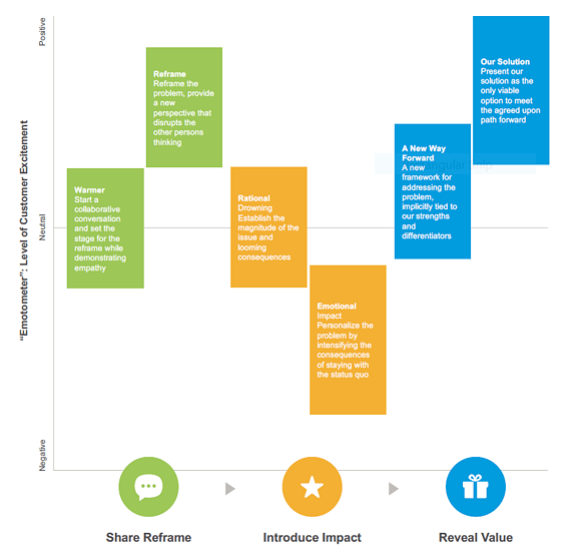
How to tell a story—sales rep style.
SaaS Zendesk used storytelling to boost their company into IPO. During its growth, the company launched a completely separate brand called Relate by Zendesk. It has its own content hub, social channels, and even an annual Relate Live conference.
But more importantly, it gives its sales team the chance to tell and sell a story. The company has created a place for its target market, customer service teams, to get together, swap stores, and join a community they can relate to.
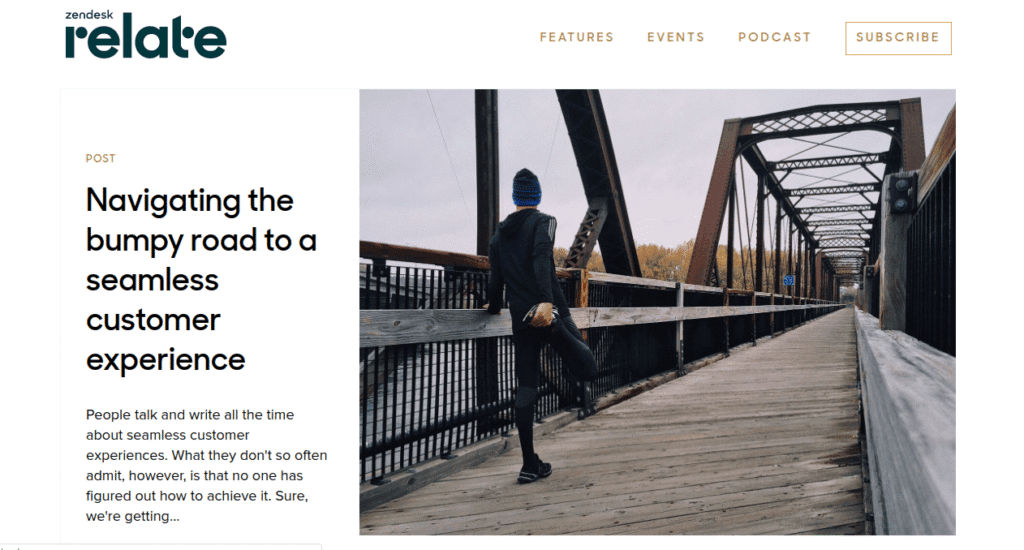
Instead of trying to create a sense of community in their brand, Zendesk just built a whole community instead.
When a sales rep at Zendesk starts telling a prospect about the company, they won’t be talking about Zendesk features. They’ll be pitching them on the community they’ll be joining. And that’s a story worth telling.
Key takeaway: Does your SaaS have a story your sales reps can use in their pitches? Think small. You don’t have to build a whole website like Zendesk to have an amazing story to tell your customers.
2. Emotional branding can help sales reps cash in on FOMO
Most people have a fear of missing out (FOMO), especially when it comes to growing their businesses.
A whopping 56 per cent of people are afraid they’ll miss out if they don’t stay on top of what’s happening on social media. On top of that, a study from Citizens Relation found 39 per cent of people felt envious, and a further 30 per cent felt jealousy from missing out.
But when it comes to sales, it’s important to remember that some of the people that feel these emotions and are powered by them are the gatekeepers at companies they’re trying to sell. Sales reps can use FOMO to push customers into wanting a sense of belonging. To want to be included in their product and its community.
SaaS Sumo uses FOMO to push its sales by telling prospects just how many other companies are using their tool to grow their businesses.
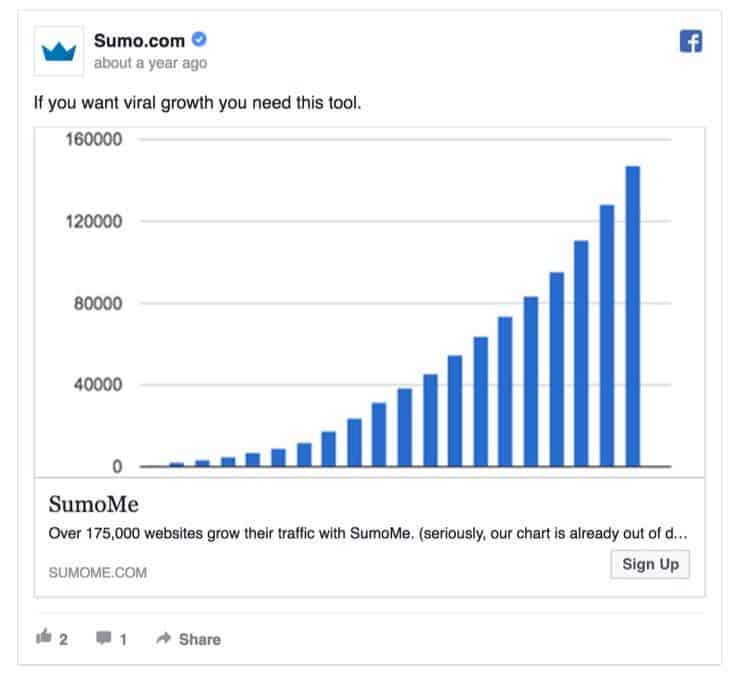
A Sumo facebook ad that rubs salt into the wounds of every prospect that isn’t using the tool to grow their business.
What can your sales reps learn from Sumo?
They can use FOMO in their sales pitches to spark an emotional response in how their prospects look at your product. By using the number of current customers on your books and telling prospects how many people are already using your products for their benefit, your reps can use FOMO as a powerful persuasion tool to close deals.
Key takeaway: The more a prospect feels like they’re missing out on a great opportunity, or like they’re an outsider in a community, the more intrigued they’re going to be about giving the product a shot. What part of your brand can you use to inject a bit of FOMO into your prospects?
3. Emotional branding sells your prospect’s on an experience
When sales reps are pitching a prospect, they must remember that everybody wants to feel needed, valued, and important.
Marc Gobe says in his book “Citizen Brand: 10 Commandments for Transforming Brands in a Consumer Democracy”, that selling is about companies putting themselves in their customer’s shoes. In return, they’ll be able to look at how a prospect perceives their product and make it easier to build a pitch around that.
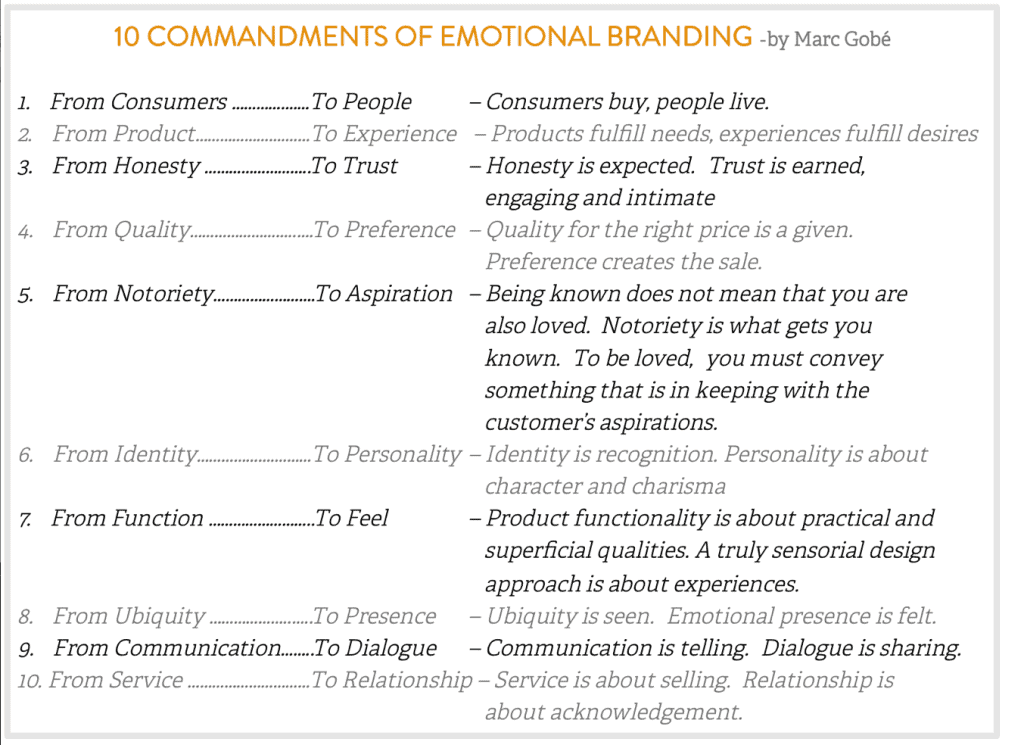
It’s perhaps the seventh commandment, from function→feel that sales reps can take the most from. Instead of selling a prospect on product functionality and superficial qualities, why don’t you empower your reps to flip their game and sell your product as an experience instead?
Let’s talk about how Drift has managed to sell itself as an experience, rather than just another chatbot. When he describes a company’s branding, Drift’s then-Brand Marketer Erik Devaney says it’s more than just a logo, a tagline, a mascot, advertisements, or a charismatic CEO.
“Sure, those things are all part of your brand identity — the visual cues used to represent your brand — but your actual brand that underlies those things encompasses much, much more,” he said.
“Your brand consists of the overall experience people have while interacting with your company and your product. It isn’t one distinct thing, it’s all of the things, working in unison.”
It’s no longer viable, Devaney says, for companies to rely on data or content as their competitive advantage anymore—because every company has access to these. Instead, it’s up to companies to leverage their branding as their differentiator.
That’s exactly how Drift managed to penetrate the saturated chatbot market: they branded themselves as a chatbot that used real conversations. And that struck a chord with companies who were tired of their site’s chatbots sounding like, well… chatbots.
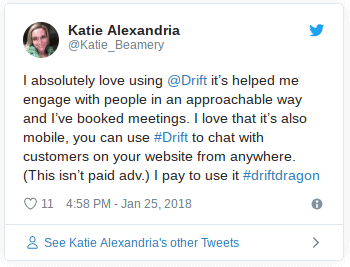
Drift knew their target customers—B2B consumers—spent a good chunk of time filling out forms to access static, one-way information. By giving its sales reps the ammunition to sell their prospects on an experience (hello… real conversations!), Drift was able to build a customer base of 150,000 in just 4 years.
Key takeaway: Sell your prospects on experience, instead of features and price.
Actionable Emotional Branding Implementation Checklist
- Audit your onboarding flow to ensure users experience value within the first week
- Define your brand’s emotional personality using the five key traits framework
- Train sales reps to use customer success stories as emotional narratives
- Implement FOMO tactics by showcasing customer adoption metrics
- Develop experience-focused sales messaging that goes beyond features
- Ensure visual consistency across all customer touchpoints
How Revenuegrid Enables Emotional Branding
Revenuegrid’s Revenue Action Platform empowers sales teams to create emotional connections through data-driven insights, automated workflows, and personalized engagement strategies that make every customer interaction count.
While emotional branding strategies are powerful, implementing them consistently across your sales organization requires the right technology foundation. Revenuegrid’s platform enables emotional branding in several key ways:
Data-Driven Emotional Intelligence
Revenuegrid captures 100% of customer interactions across all communication channels, giving your sales team the complete context needed to build emotional connections. When reps understand a prospect’s communication patterns, engagement history, and decision-making timeline, they can craft more personalized, emotionally resonant outreach.
Automated Workflow Personalization
The platform’s AI-driven insights help sales teams identify the optimal moments for emotional engagement. By analyzing buyer behavior patterns, Revenuegrid can suggest when prospects are most receptive to storytelling, when FOMO tactics might be effective, and how to position your solution as a transformational experience.
Consistent Brand Experience
Revenuegrid integrates natively with your existing CRM and email systems, ensuring that every customer touchpoint reflects your brand’s emotional positioning. The platform maintains consistency across all sales activities, from initial outreach through deal closure and beyond.
One Revenuegrid customer, a leading enterprise software company, increased their win rates by 28% after implementing emotional branding strategies supported by Revenuegrid’s guided selling capabilities. The platform helped their sales team identify which prospects responded best to community-focused messaging versus urgency-driven approaches.
Ready to see emotional branding in action? Book a personalized demo with Revenuegrid’s experts to learn how your team can leverage data-driven insights to create deeper emotional connections and shorten deal cycles.
Wrapping up
Emotional branding is something that gets your prospects right in the #feels.
Sure, it’s not something that your sales reps can serve up as case studies or additional features, but that doesn’t mean emotional branding isn’t important. In fact, it’s the opposite. Remember that 82% of adults in the US alone will buy products from a brand they’re loyal to.
And loyalty is built on a sense of belonging and emotional connections.
In the salesroom, your reps must be drawing on their prospect’s emotions rather than relying on facts and figures to close a deal. The more they’re able to tell a story, sell them on experience and paint a picture of the journey a prospect can take with your company, the less they’ll need to worry about data points.
Because your prospects aren’t that worried about all that stuff—they just want their problems solved. So, is it time to turn your sales reps into storytellers who can create emotional connections that drive measurable business outcomes?
What is an example of emotional branding?
Slack is a prime example of emotional branding in SaaS. Instead of focusing solely on features like messaging and file sharing, Slack positions itself as making “people’s working lives simpler, more pleasant and more productive.” They’ve built a brand personality around sincerity, friendliness, and being down-to-earth, which creates strong emotional connections with users who feel part of a community rather than just customers of a tool.
What are the four pillars of emotional branding?
The four pillars of emotional branding are: 1) Relationships – building genuine connections with customers beyond transactions, 2) Sensorial Experience – engaging multiple senses through design, interface, and interactions, 3) Imagination – helping customers envision their success and transformation, and 4) Vision – sharing a compelling future state that customers want to be part of. These pillars work together to create emotional bonds that drive loyalty and advocacy.
How does emotional branding work in SaaS?
Emotional branding in SaaS works by connecting with users’ psychological needs for belonging, success, and recognition rather than just solving functional problems. It starts with user experience design that makes customers feel confident and accomplished, extends through sales conversations that focus on transformation rather than features, and continues with ongoing support that makes users feel valued. SaaS companies use storytelling, community building, and consistent brand personality to create emotional connections that reduce churn and increase lifetime value.